









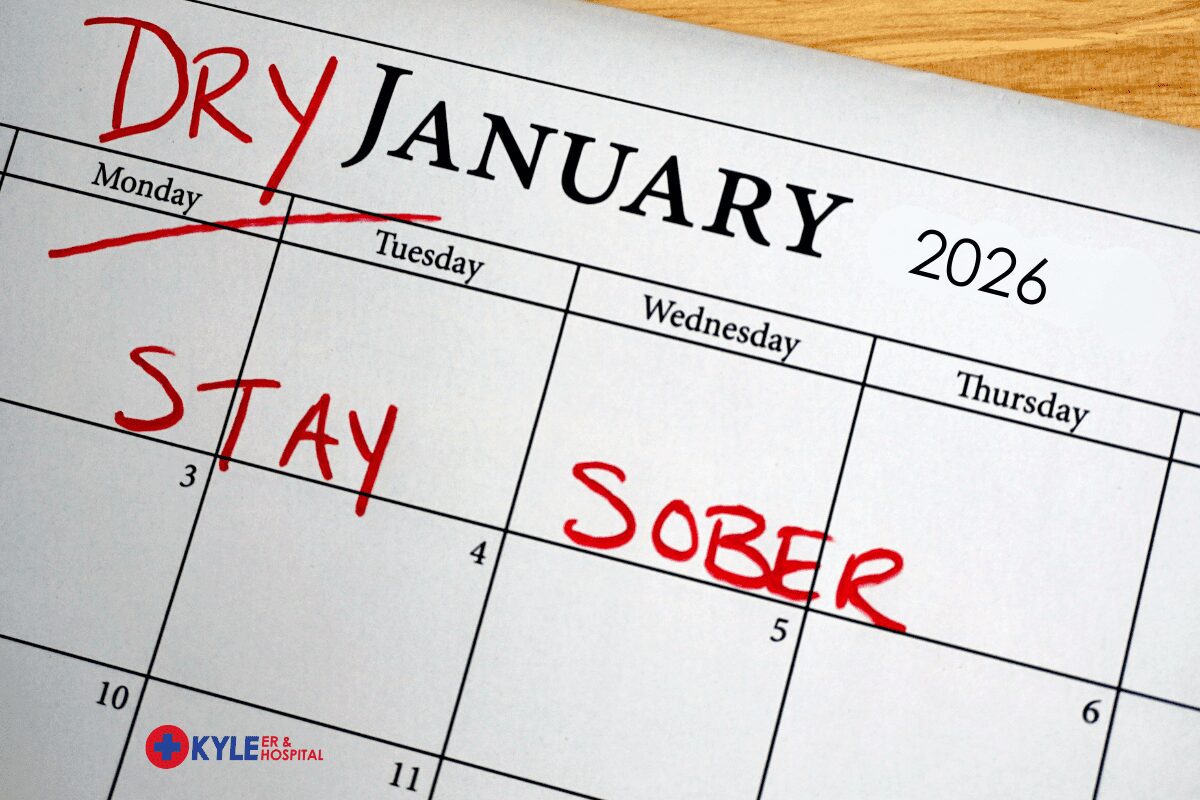
Quitting Drinking: When Willpower Isn’t Enough, Medical Detox Can Help
Every January, many people commit to Dry January, a month without alcohol, to reset their health after the holidays. For some, it’s a manageable challenge. For others, stopping alcohol use brings unexpected physical and emotional symptoms that can feel overwhelming, or even dangerous.
At Kyle ER & Hospital, we want the community to know: needing medical support when quitting alcohol is not a failure, it’s a sign of taking your health seriously.
What Is Dry January?
Dry January is a popular health movement that encourages people to stop drinking alcohol for the month of January. Many participants report benefits such as:
- Better sleep
- Improved energy
- Lower blood pressure
- Clearer thinking
- Reduced anxiety
But for individuals who drink regularly or heavily, quitting suddenly can be more than uncomfortable, it can be medically risky.
Alcohol Withdrawal: What Many People Don’t Expect
Alcohol affects the brain and nervous system. When drinking stops suddenly, the body can struggle to rebalance itself.
Common withdrawal symptoms include:
- Tremors or shaking
- Sweating
- Nausea or vomiting
- Anxiety or restlessness
- Trouble sleeping
- Rapid heart rate or high blood pressure
More serious symptoms can include:
- Severe confusion
- Hallucinations
- Seizures
- Dangerous changes in heart rate or blood pressure
These symptoms are one of the reasons alcohol withdrawal frequently leads to emergency room visits in January.
When Quitting Drinking Becomes a Medical Emergency
You should seek immediate medical care if you or a loved one experiences:
- Seizures
- Confusion or disorientation
- Hallucinations
- Uncontrollable vomiting
- Fever with withdrawal symptoms
- Chest pain or shortness of breath
Alcohol withdrawal can escalate quickly. Medical supervision can be lifesaving.
How Kyle ER & Hospital’s Medical Detox Program Can Help
For individuals who want to quit drinking safely, Kyle ER & Hospital offers a medically supervised detox program designed to manage withdrawal symptoms and reduce risks.
Our medical detox services provide:
- 24/7 medical monitoring
- Medications to ease withdrawal symptoms
- Support for anxiety, nausea, and sleep disturbances
- A safe, controlled environment during the most difficult phase of quitting
- Connection to ongoing care and recovery resources
Medical detox focuses on safety, stabilization, and comfort, so patients don’t have to face withdrawal alone.
Dry January Can Be a Turning Point
For many people, Dry January becomes more than a one-month challenge. It can be the first step toward:
- Cutting back long-term
- Rebuilding physical and mental health
- Recognizing when professional support is needed
If Dry January feels harder than expected, it may be a sign that your body has become dependent on alcohol, not a sign of weakness.
You’re Not Alone, Help Is Available
From an emergency and hospital perspective, we see firsthand how alcohol-related complications affect individuals and families. Seeking help early can prevent:
- Emergency room visits
- Serious withdrawal complications
- Long-term health damage
Whether you’re trying Dry January, thinking about quitting drinking, or concerned about withdrawal symptoms, Kyle ER & Hospital is here to help, without judgment. Call 512-698-0773 for a confidential conversation.